Minesweeper Patterns: Clear the Grid Without Guessing
Most Minesweeper boards can be solved with a handful of number patterns. Learn to read 1-1, 1-2-1 and chording, and you'll guess far less often.
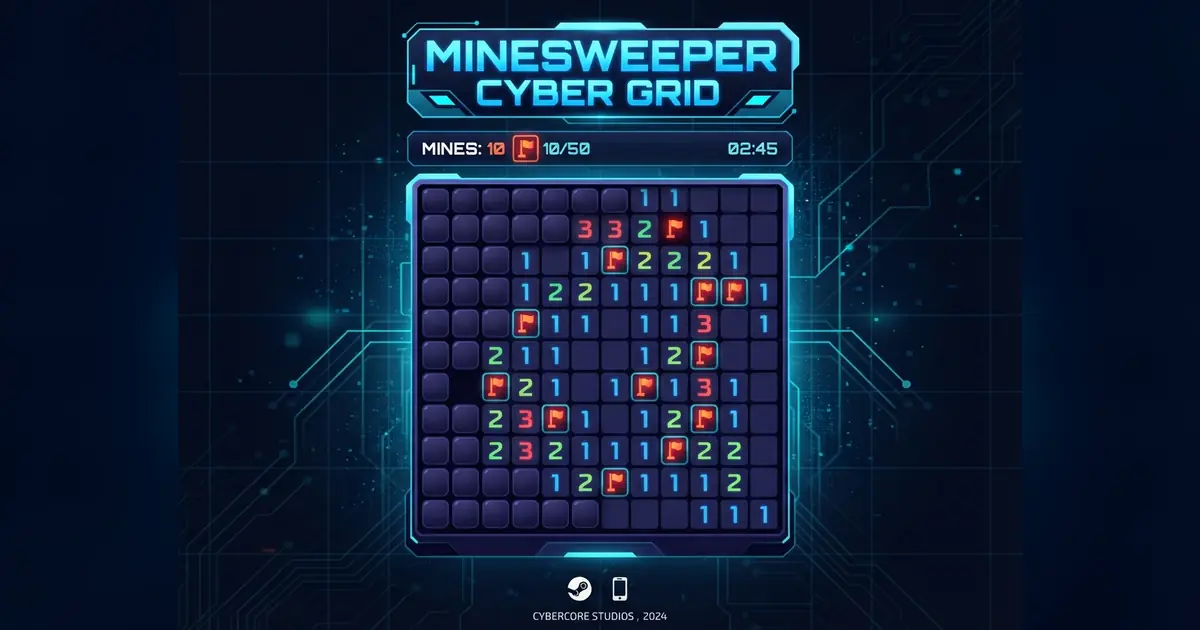
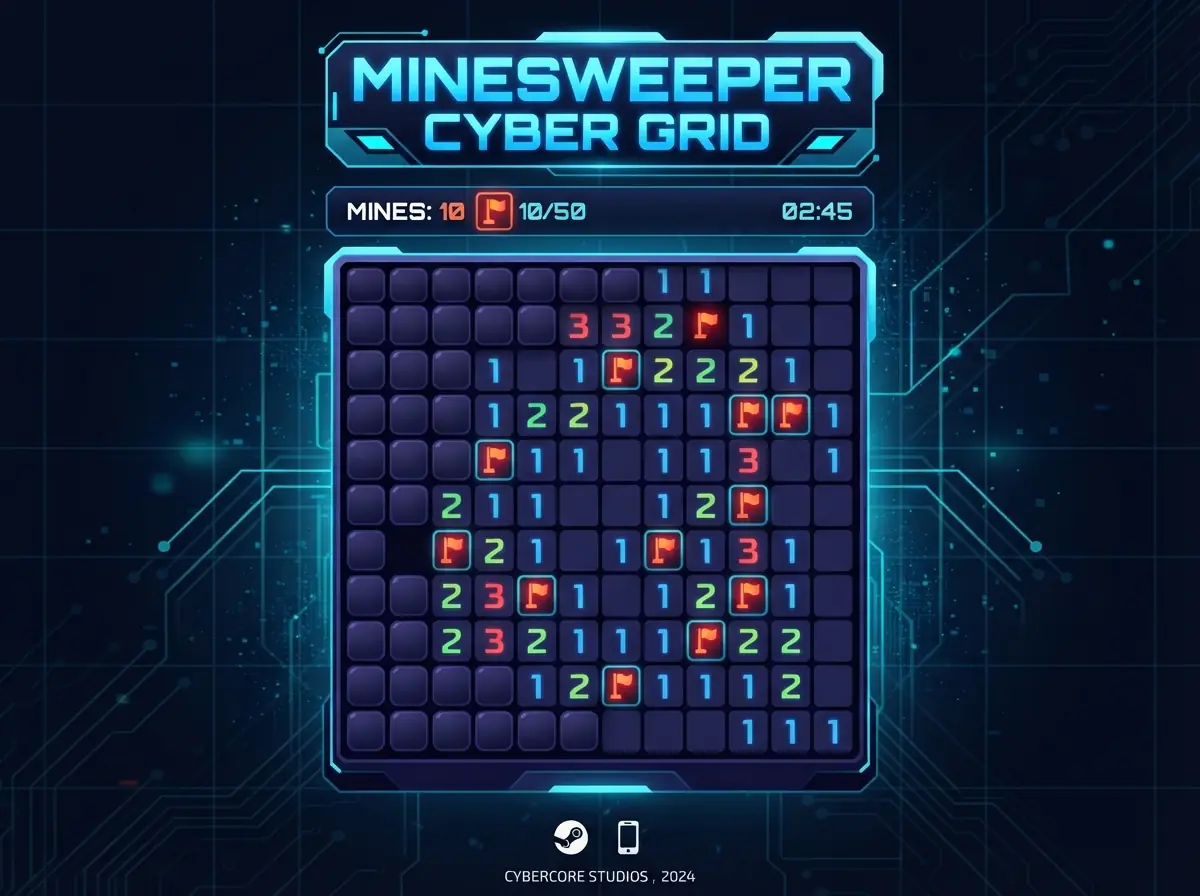
Minesweeper has a reputation as a game of luck, but most of a board can be cleared with pure logic. Every number tells you exactly how many mines touch that square, and a few recurring patterns turn those numbers into certainties. Everything here applies to our Minesweeper Cyber Grid.
The first click
Your first click is always safe, and it usually opens an area of empty squares surrounded by numbers. That border of numbers is where every solve begins. Don't click randomly elsewhere; work outward from what you can see.
The simplest rule
If a number touches exactly as many hidden squares as its value, all of those squares are mines. A 1 in a corner with only one hidden neighbour: that neighbour is a mine. Flag it.
The opposite is just as useful. If a number already has all its mines flagged, every other hidden square around it is safe.
Chording
Once a number's mines are all flagged, click the number itself. This chord reveals all of its unflagged neighbours at once. It is the single biggest speed-up in the game, but it only works if your flags are right, so flag only when you're certain.
The 1-1 pattern
Along a straight wall of hidden squares, two 1s side by side often share the same possible mine. If the first 1 can only see two hidden squares, and the second 1 sees those two plus one more, the extra square must be safe. The mine is somewhere in the shared pair.
The 1-2-1 pattern
Three numbers reading 1-2-1 along a flat edge have one solution: the mines sit under the two 1s, and the square under the 2 is safe. You'll see this pattern constantly on beginner and intermediate boards.
The 1-2-2-1 pattern
On a flat edge, 1-2-2-1 means the mines sit under the two 2s, and the squares under the 1s are safe. Learning to spot these two patterns instantly will clear large parts of the board without any thought.
When you have to guess
Sometimes the numbers really do leave two equal choices, often near the end of a board. When that happens:
- guess as early as possible, so a loss costs less time,
- prefer squares that will reveal the most new information if they're safe,
- and avoid squares boxed in by other hidden squares, where a safe reveal tells you little.
Final thoughts
Minesweeper rewards patience and pattern recognition. Start on Beginner, learn the 1-2-1 and 1-2-2-1 patterns until you see them without counting, and start chording. Intermediate and Expert boards will soon feel like logic puzzles rather than lotteries.