Pipe and Circuit Puzzles: A Beginner's Guide to Connecting Networks
Rotate-the-tile puzzles look random at first, but they follow simple rules. Learn where to start and how to avoid leaks and short circuits in Pipe Connect and Satellite Repair.
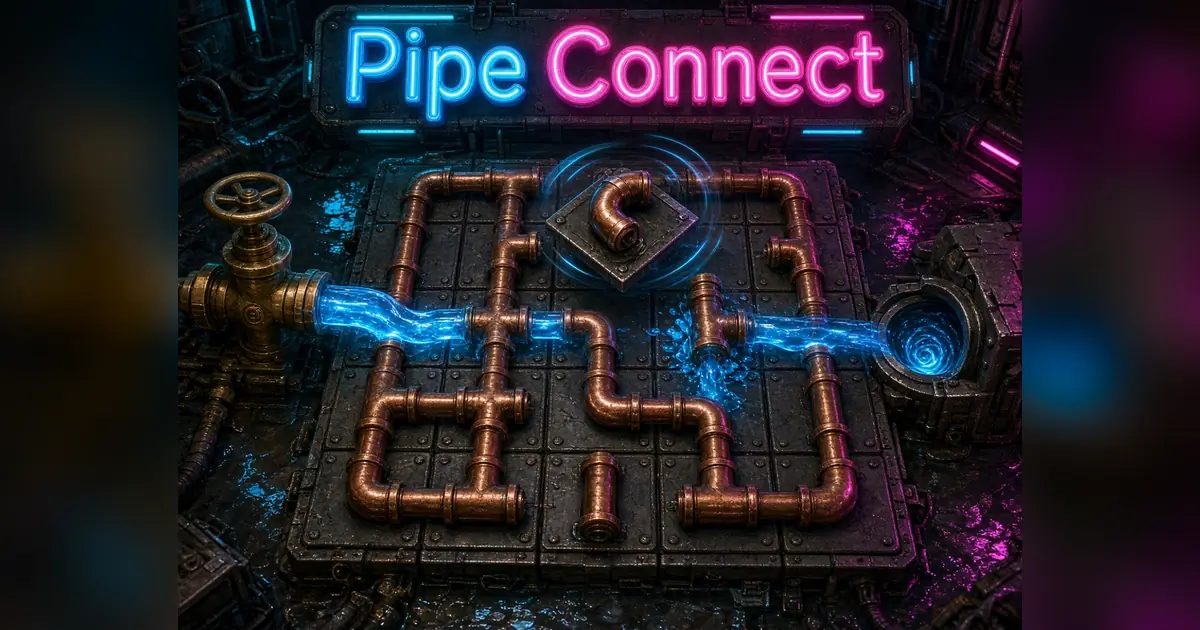
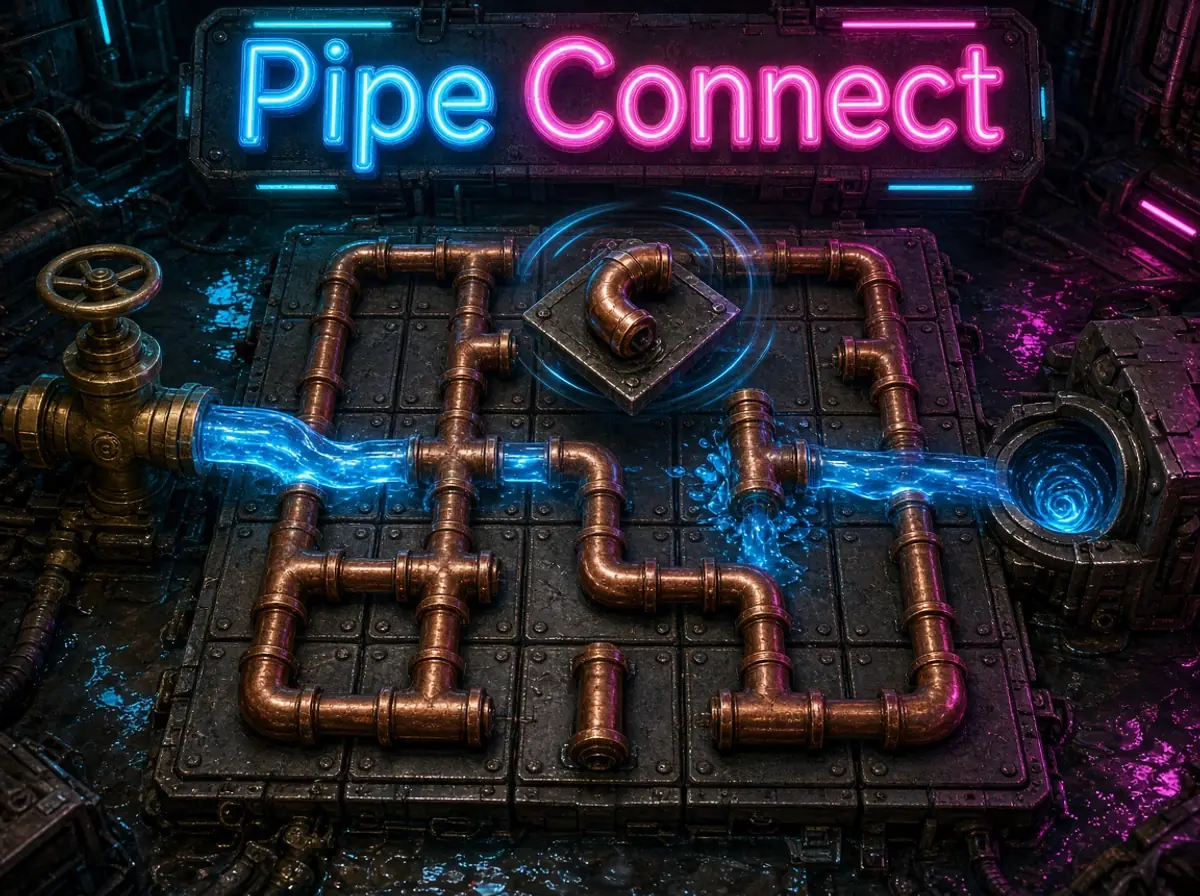
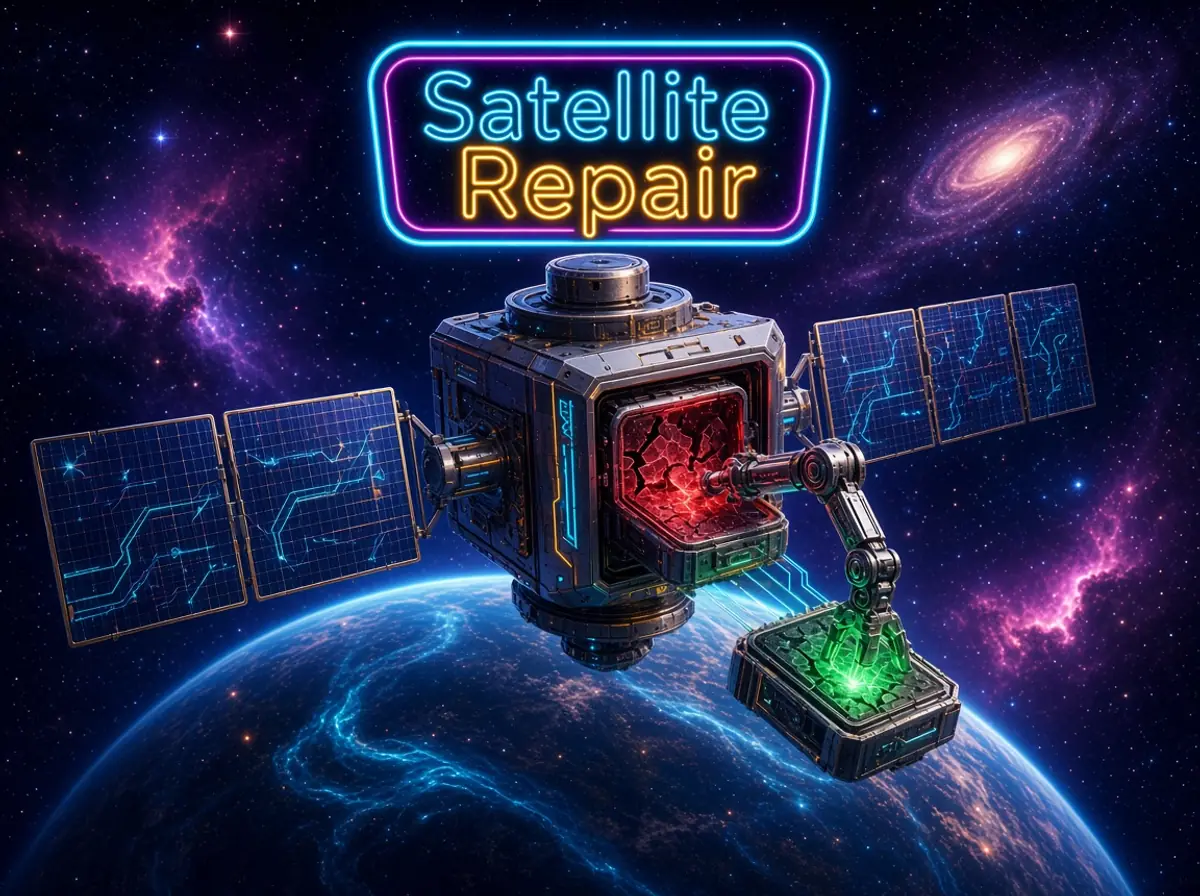
Connection puzzles hand you a scrambled grid and one simple instruction: rotate the pieces until everything links up. They are relaxing, satisfying and surprisingly logical once you know where to look. This guide covers the core techniques, using two of our puzzles as examples: Pipe Connect, where you plumb water from pumps to drains, and Satellite Repair, where you route colour-coded power circuits on a damaged satellite.
How rotation puzzles work
In both games, every tile can be turned in quarter steps. In Pipe Connect you click or tap a pipe to turn it clockwise, and on a keyboard you can turn it the other way with Q or Z. In Satellite Repair you tap a relay module to rotate it. The goal is always the same: create a complete, closed network with no loose ends.
What makes these puzzles solvable by logic rather than luck is that most tiles have only one position that fits their neighbours. Your job is to find the tiles whose answer is certain and work outwards from them.
Start where the answer is fixed
The best starting points are the pieces you cannot move:
- Sources and destinations. In Pipe Connect, the pumps and drains always face the same way, so the tile beside each one often has only one sensible rotation.
- Edges and corners. A pipe at the edge of the grid can never point outwards, because there is nothing there to connect to. A corner tile is even more restricted.
- Bolted pieces. Later levels of Pipe Connect add bolted pipes that cannot turn. Treat them as fixed points and build the rest of the network around them.
Once one tile is certain, its neighbours become easier, and the solution spreads across the board like a chain reaction.
Avoid open ends and leaks
Every pipe end must meet another pipe end. In Pipe Connect, the water starts flowing as soon as the network is sealed, and a leak or a dry drain costs one of your three lives. Before you place the final piece, trace each line with your eyes from pump to drain and make sure nothing points into empty space.
Pipe Connect also introduces two special pieces:
- Crossovers carry two separate streams through the same tile without mixing them, so a pipe can pass straight through.
- Valves must be opened on the main line and kept shut on dead-end spurs, otherwise water spills out of the open branch.
Keep circuits apart in Satellite Repair
Satellite Repair adds colour. Solar panels and a battery each power their own subsystems, and every circuit must stay separate: if a module is touched by two colours, it short-circuits. Route one colour at a time, starting with the circuit that has the fewest possible paths, then fit the others around it.
There is also a power budget. Every lit module draws power, so shorter routes are better. A few extra tools help:
- Splitters feed two subsystems at once but cost more power.
- Capacitors give back a unit of power, so routing through them helps you stay within budget.
- Burnt modules must be replaced: tap a spare part in the tray, then tap the burnt module to swap it in.
Read the status line under the satellite. It tells you exactly what is wrong, from a short circuit to a budget overrun. When everything is ready, activate the uplink before the orbit window closes. Unused power at the end adds to your score.
Turn stray pieces away
A common beginner mistake is leaving tiles pointing into a live line even though they are not part of the route. In Satellite Repair, a module that lights up for nothing still uses power. In Pipe Connect, a stray pipe pointing into your network creates an open end. Once a route is finished, rotate any unused neighbours away from it.
Earn more stars
Both games reward efficiency. In Pipe Connect, finishing close to the move par earns three stars, and every third level runs against the clock, so the faster you seal the network, the more stars you collect. Planning before you click saves moves: look at the whole board, solve the certain tiles first and only then experiment with the tricky middle.
Quick checklist
- Start beside sources, destinations, edges and fixed pieces.
- Solve certain tiles first and let the solution spread.
- Trace every line before sealing the network.
- Route one circuit colour at a time and keep them apart.
- Turn unused tiles away from live lines.
Final thoughts
Connection puzzles are about reading constraints, not trying every rotation. Find the pieces that can only go one way, build outwards and check for loose ends before you commit. Once that habit clicks, even the sprawling final grids become a calm, satisfying solve. Try Pipe Connect and Satellite Repair, or explore more Puzzle games.