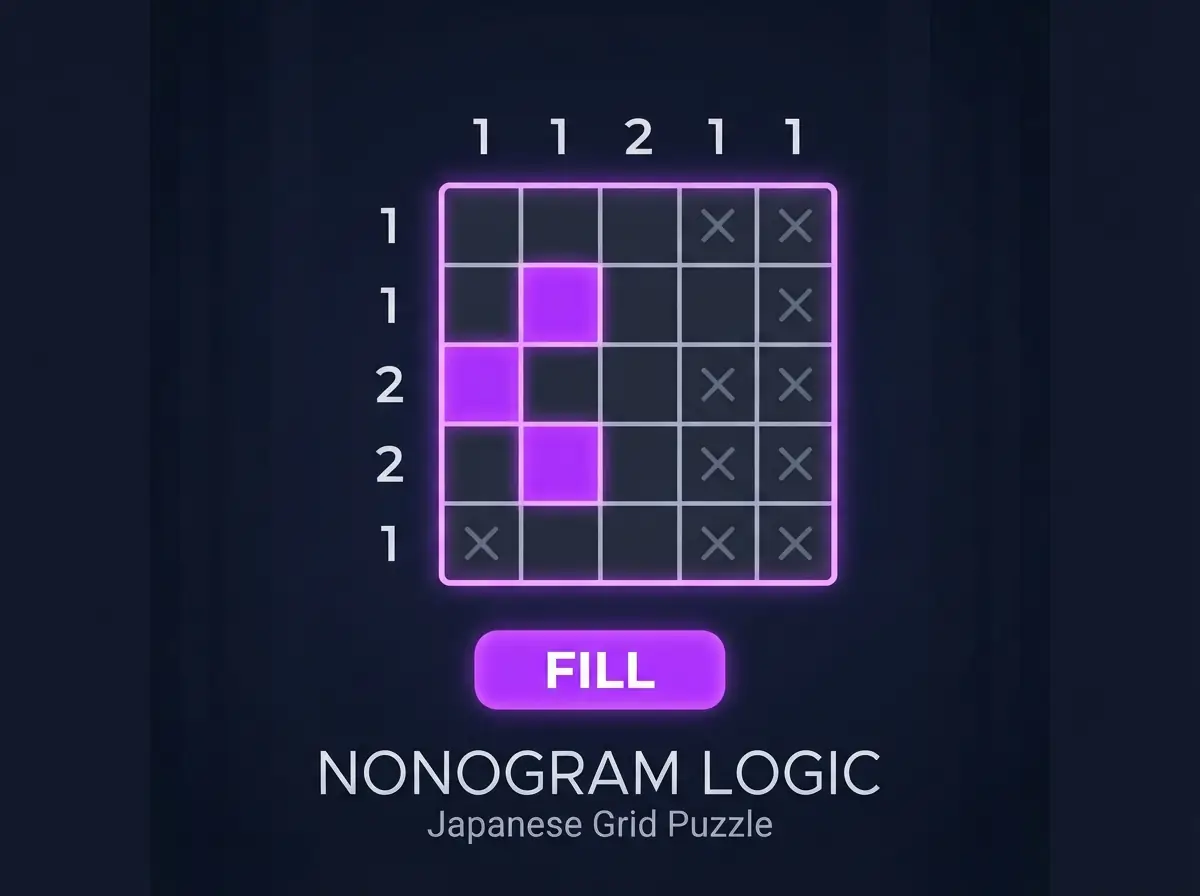
Nonograms for Beginners: From Number Clues to Pictures
Nonograms hide a pixel picture behind rows of number clues. Learn how to read the clues, find guaranteed squares and mark empty cells with confidence.
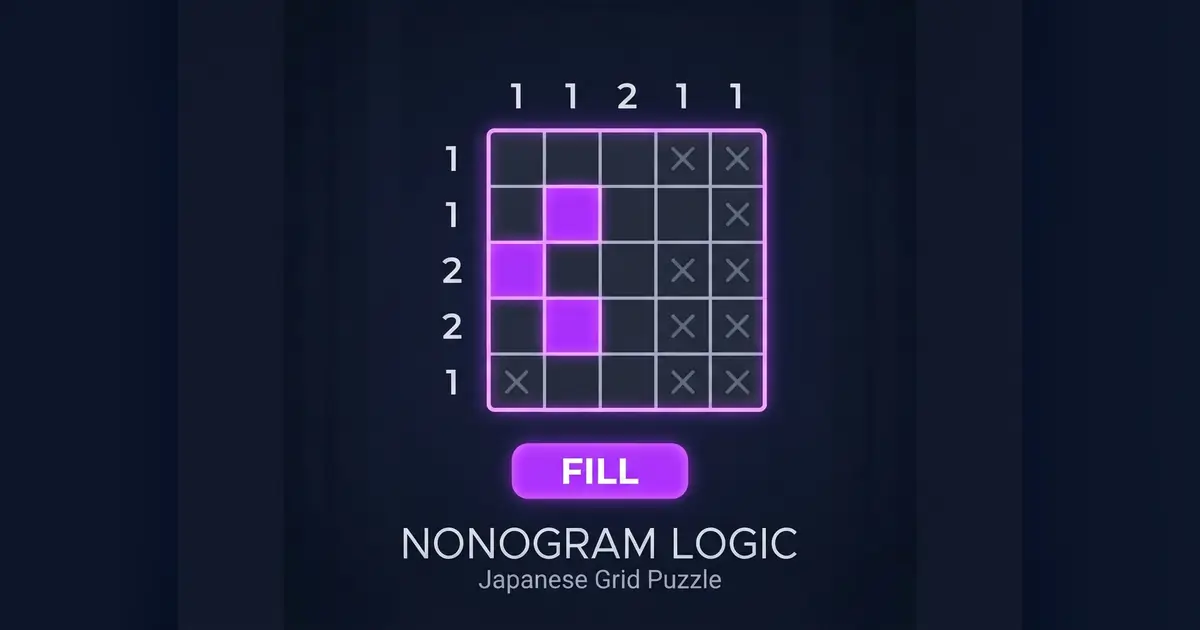
Nonograms, also called picture logic puzzles, start as an empty grid with numbers along the top and left side. Follow the clues correctly and a small pixel picture appears. They look intimidating at first, but a handful of ideas makes them very approachable. Everything here applies to the cases in our Nonogram Logic.
Reading the clues
Each number tells you the length of a solid run of filled squares in that row or column, in order.
- A clue of 5 means one run of five filled squares somewhere in the line.
- A clue of 2 3 means a run of two, then at least one empty square, then a run of three.
The clues never tell you where the runs start. Working that out is the puzzle.
Start with the big numbers
Suppose a row is 10 squares long and its clue is 8. Wherever that run of eight sits, it must cover the middle six squares. You can fill those in straight away.
A quick way to see this: imagine the run pushed as far left as possible, then as far right as possible. Any squares covered in both positions are certain.
The same overlap trick works for lines with several numbers. Push all the runs left, push them all right, and fill any squares where the same run overlaps itself.
Mark empty squares too
Placing an X (or dot) in squares you know are empty is just as important as filling squares. Empty marks:
- close off the ends of finished runs,
- shrink the space available for the remaining runs,
- and often create new overlaps in the crossing lines.
When a line's clues are all satisfied, mark every other square in it as empty.
Work back and forth
Every filled or empty square gives information to the line that crosses it. The rhythm of a nonogram is:
- Solve what you can in the rows.
- Switch to the columns and use the new squares.
- Switch back to the rows.
Keep going until the picture completes. If a line gives you nothing new, move on and come back later.
Common beginner mistakes
- Guessing. A good nonogram never needs it. If you are tempted, look for an overlap you missed.
- Forgetting the gap. Runs from different numbers must be separated by at least one empty square.
- Ignoring zeros. A clue of 0 means the whole line is empty, which is a free start.
Final thoughts
Nonograms reward calm logic: find the overlaps, mark the empties and let each line feed the next. Start with small grids, enjoy the moment the picture appears, and gradually work up to larger boards.