Simulation Game Multitasking: 9 Habits for Busy Shifts
Burgers sizzling, lights to switch, crates swinging in the wind: learn the habits that keep you calm and in control in fast simulation games.
Simulation games love to give you more jobs than hands. A customer is tapping their foot, a patty is about to burn and a second order has just arrived. The good news is that staying on top of it is a skill, not a talent. These nine habits work across almost every management game, and we will show how they apply to four games in our library.
1. Know your timers
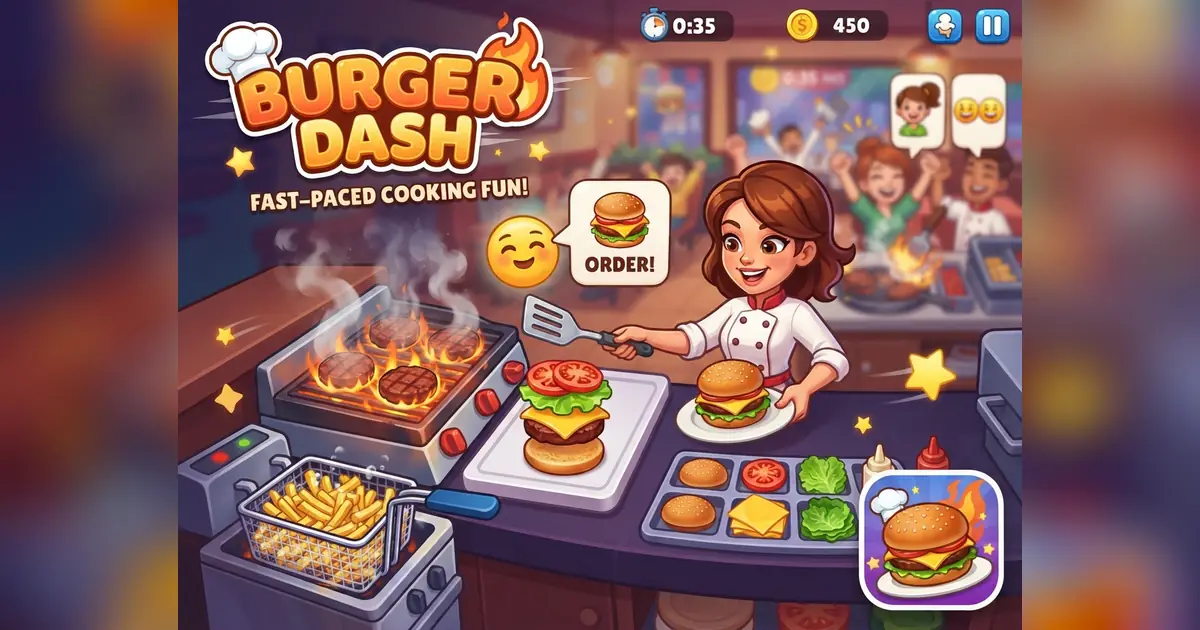
Every busy simulation runs on hidden clocks. Learn them and the chaos becomes predictable. In Burger Dash, a patty is ready after about six seconds on the grill and only burns at around thirteen, so you have a generous window to finish something else first. Fries are a little faster, and a drink fills in under two seconds. Once you know those numbers, you stop hovering over the grill and start using the waiting time.
2. Always keep the slow job running
The task that takes longest should never sit idle. Every order in Burger Dash includes a burger, so a patty should be on the grill almost all the time, even before the next customer sits down. The same idea applies elsewhere: start the slow thing first, then fill the gaps with quick tasks.
3. Serve the most urgent need, not the oldest
It feels fair to work strictly in order, but it is rarely the best plan. Watch the patience bars and serve whoever is closest to walking out. Late in a shift, orders grow larger and patience gets shorter, so this matters more the longer you play.
4. Accuracy beats speed
A wrong order is worse than a slow one. In Burger Dash, handing over the wrong burger knocks a quarter off that customer's patience and you still have to make the right one. Take half a second to compare the plate with the order bubble before you tap.
5. Read the whole screen before acting
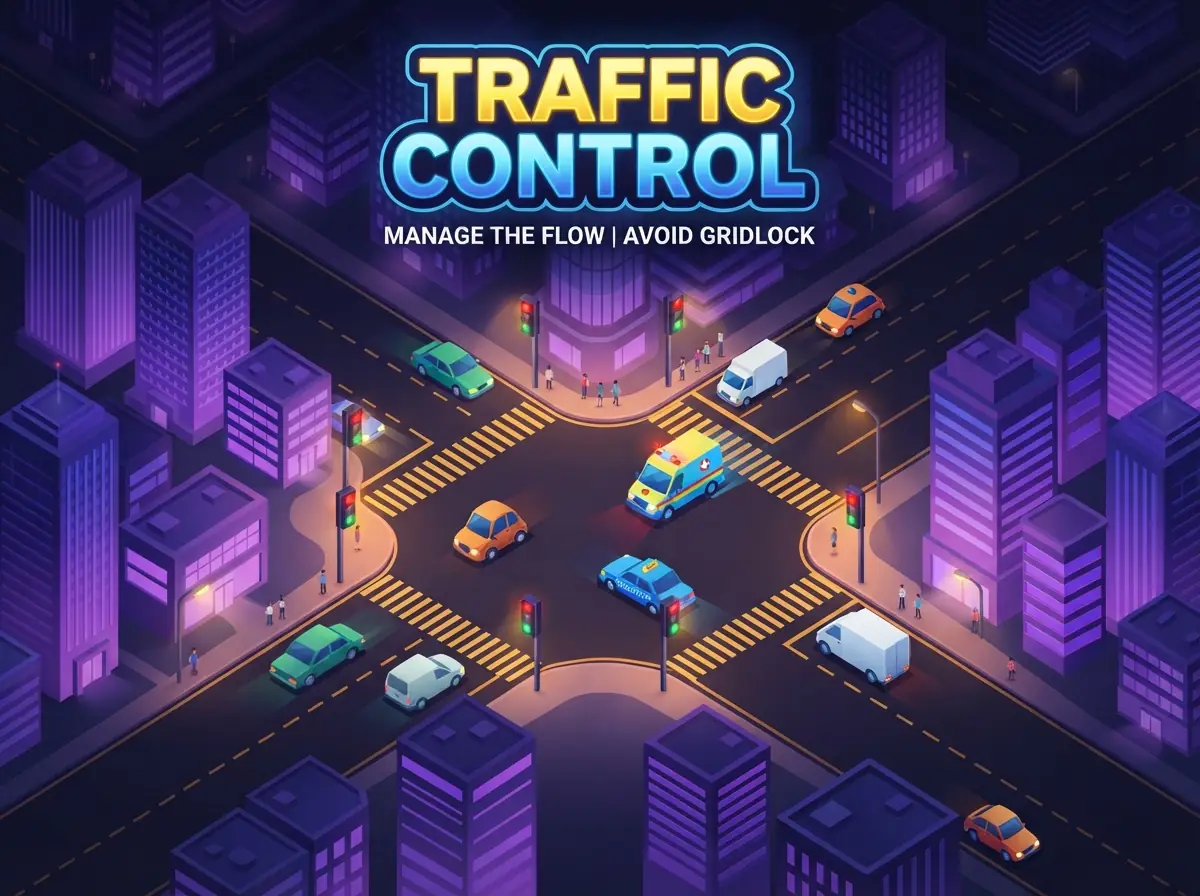
In Traffic Control, you run two junctions at once and every vehicle wants a green light. Before you flip anything, glance at both junctions: which queue is longest, is a slow truck still crossing the box, and is there a flashing ambulance coming in from the edge? One look at the whole picture prevents most crashes.
6. Give priority items a reflex
Some events always come first. Ambulances in Traffic Control cost a life if they wait too long, so treat them as a reflex: see the flash, switch the light, then go back to normal planning. Deciding your priorities in advance means you never hesitate when it matters.
7. Let things settle before you commit
Rushing often creates more work. In Tower Crane, a crate keeps swinging on its cable after you move the trolley, and dropping it mid-swing in a strong wind topples the stack. Move smoothly, let the pendulum calm down, check the wind sock and release when the crate is lined up. Slower movements usually mean fewer lives lost.
8. Spend limited resources deliberately
Not every simulation is about speed. Potion Craft gives you thirty brews to discover as many potions as possible, and a failed mix still uses one up. Read the riddles in the recipe book, try new potions with the basic ingredients, and save guesswork for when you have no better lead. Managing a budget is still multitasking: you are juggling what you know, what you suspect and what you can afford to test.
9. Recover, don't spiral
Everyone burns a patty or misses a light eventually. The players who score highest are the ones who shrug it off and get back to the routine straight away. Panic leads to rushed taps, which lead to more mistakes. Take a breath, restart the slow job and pick the most urgent task.
Final thoughts
Multitasking in games is really about routines: know your timers, keep the slow job running, handle priorities by reflex and check before you commit. Try a three-minute shift in Burger Dash with just one of these habits in mind, and you will feel the difference by the end of the round.